

Choosing the right roller shutter motor is not only a technical decision. It directly affects daily operation, security performance, and long-term maintenance requirements. Understanding central roller shutter motor applications helps ensure the system matches the real working conditions.
A central roller shutter motor is used to automate the movement of roller shutters in residential, commercial, and light industrial environments. It is commonly installed in homes, garages, storefronts, small business units, and service entrances where controlled and reliable operation is required.
Key Takeaways
- A central roller shutter motor is best understood through its application, not just its mechanism.
- In homes, it is often used for garage shutters, security shutters, and exterior rolling closures.
- In commercial buildings, it is commonly used for storefronts, service entrances, and light-duty warehouse shutters.
- Residential and commercial needs differ in frequency of use, shutter weight, control systems, and maintenance expectations.
- The best motor choice depends on practical factors such as shutter size, duty cycle, and user convenience.
- A good installation matters as much as the motor itself.
What Is a Central Roller Shutter Motor?
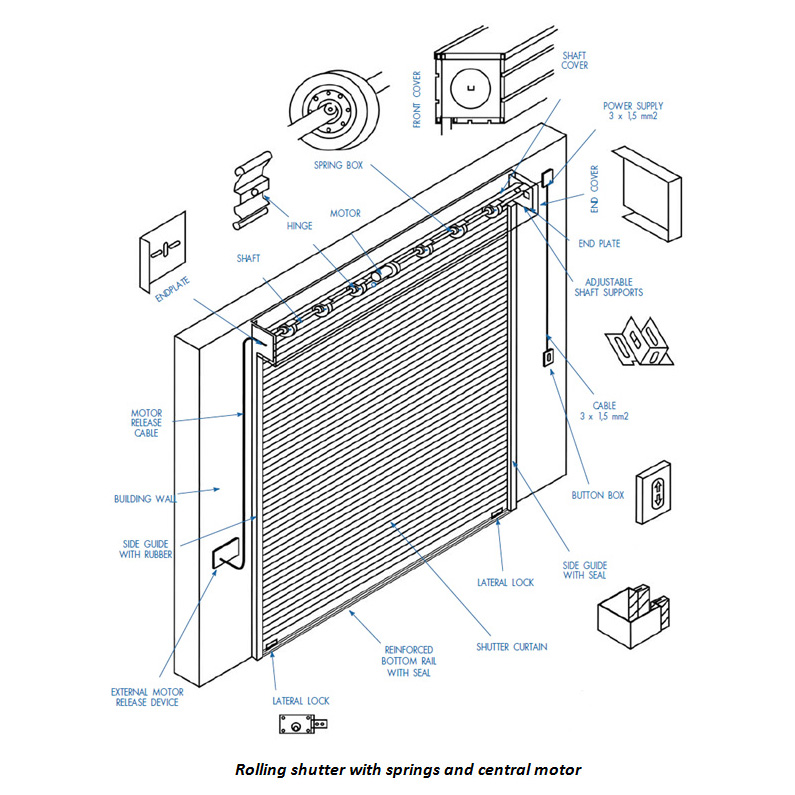
A central roller shutter motor is an electric drive system designed to automate the opening and closing of a roller shutter. Unlike purely manual systems, it reduces the need for physical effort and provides more consistent, controlled movement.
In practical terms, this type of central roller shutter motor is used when a shutter needs dependable operation and a cleaner, more efficient user experience. The term “central” is often associated with applications where the motor is intended to handle a shutter in a robust, functional way, especially in shutters that go beyond basic domestic use.
For many buyers, the important question is not the label itself. It is this: where does this motor type make the most sense? That is where application-based content becomes more useful than generic product descriptions.

Where Central Roller Shutter Motors Are Commonly Used
The applications of a central motor for roller shutter systems become clearer when you look at the environments where it is actually installed. In most cases, a roller shutter motor is used in residential buildings, retail storefronts, and light commercial facilities where a balance between security, convenience, and daily operating reliability is required.
While different configurations exist, the central roller shutter motor remains one of the most widely used solutions for medium-duty shutter systems.
Applications in Homes
In residential environments, a central motor is typically used when heavier shutters or larger exterior openings need to be automated. These shutters are often part of security systems, garages, or main access points that require frequent daily operation.
From a homeowner’s perspective, the main value of a roller shutter motor is operational simplicity. Instead of manual lifting, the system allows smooth and controlled movement with minimal effort.
Typical residential applications include:
- Homes equipped with heavy security shutters
- Main entrances and exterior access points
- Renovation projects upgrading to automated shutter systems
- Properties requiring improved accessibility and ease of use
In these scenarios, a central roller shutter motor provides a practical upgrade without changing the structural design of the shutter system.
Applications in Garages and Home Security Systems
One of the most common residential uses for a roller shutter motor is garage doors. Garage systems often require frequent daily operation, making automation a functional necessity rather than a luxury.
A properly configured central motor system helps ensure:
- smoother and more stable door movement
- reduced manual load on the user
- compatibility with remote control or smart access systems
- improved daily operational efficiency
Home security shutters also rely heavily on roller shutter motor systems, especially where consistent locking and unlocking cycles are required. In these cases, automation improves both convenience and reliability.
Applications in Storefronts and Retail Units
In commercial environments, particularly retail storefronts, shutters are operated on predictable schedules. This makes the reliability of an industrial shutter motor or commercial-grade roller shutter motor especially important.
A central motor used in storefront applications is designed to support repetitive daily cycles, typically involving opening in the morning and closing at night.
Key benefits include:
- consistent and reliable daily operation
- reduced manual handling for staff
- improved security during non-operating hours
- long-term durability under regular use
For small shops and retail units, the industrial shutter motor ensures operational stability while reducing maintenance demands.
Applications in Warehouses and Light Commercial Spaces
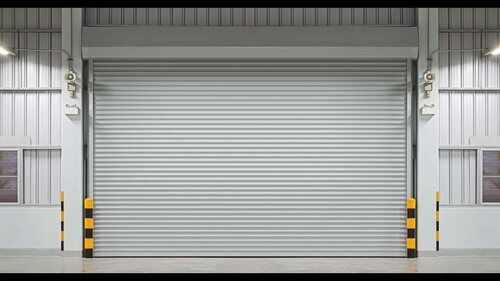
In warehouses, workshops, and service facilities, shutter systems are generally larger and used more frequently. Here, the roller shutter motor is no longer just a convenience feature but a core part of the building’s access system.
A central roller shutter motor or industrial shutter motor is commonly selected for its ability to handle more demanding operating conditions.
Typical requirements in these environments include:
- repeated daily operation with consistent performance
- compatibility with wide or heavy shutter structures
- integration into logistics and workflow processes
- reliable access control for staff and goods movement
In this context, the central motor system becomes part of the operational infrastructure rather than a simple automation upgrade.
Why Central Roller Shutter Motors Work Well in These Settings
The same motor type can serve different environments because the core benefits are broadly useful. What changes is how those benefits are prioritized.
Convenience and ease of operation
The first reason people choose an electric roller shutter motor is convenience. Automated movement saves time, reduces physical effort, and makes shutters easier to use consistently.
In homes, this often translates into comfort. In commercial settings, it translates into operational efficiency.
Security and controlled access
A shutter is often part of a building’s first layer of security. A motorized system improves control by making it easier to ensure the shutter opens and closes fully and as intended.
For homes, that means a more secure daily routine. For businesses, it means more reliable access management and closing procedures.
Consistency and durability
Manual shutters depend heavily on the user. A motorized system introduces more consistent movement, which can help support smoother day-to-day use.
That does not mean every motor automatically lasts longer, because performance still depends on sizing, installation, and maintenance. But from a usage perspective, a well-matched system tends to feel more controlled and repeatable.
Compatibility with automation systems
A central motor can also fit into a broader automation strategy. In some cases, this includes remote controls, timers, or building-level control logic.
That makes roller shutter motor for building automation systems an important subtopic, especially for commercial projects and modern homes where automation is part of the design brief.
Residential vs Commercial Applications: What Changes?
Although the same roller shutter motor category is used across both residential and commercial environments, the actual operating conditions can differ significantly. This is why comparing residential and commercial applications is essential when selecting a central motor system or an industrial shutter motor.
The difference is not only about scale, but also about duty cycle, load requirements, and long-term operating expectations.
Differences in Usage Frequency
In residential settings, a roller shutter motor is typically used a limited number of times per day. Operation is relatively light, often linked to daily routines such as opening in the morning and closing at night.
In contrast, commercial environments require far more consistent and scheduled use. A central motor in a storefront or facility may operate multiple times daily under stricter timing requirements.
This difference in duty cycle directly impacts motor selection. A unit designed for light residential use may not perform reliably under continuous or high-frequency industrial conditions, where an industrial shutter motor is usually required.
Differences in Shutter Size and Load
Commercial shutters are generally larger, heavier, and engineered for more demanding structural loads. They are designed not only for access control but also for security and operational durability.
Residential shutters, while sometimes large, are more focused on convenience, insulation, and basic security functions.
As a result, a central roller shutter motor used in residential applications typically handles lower torque requirements compared to an industrial shutter motor used in commercial or warehouse environments. Even within the same product category, performance specifications can vary significantly.
Differences in Control Requirements
Residential users usually prioritize simplicity. A roller shutter motor in a home environment is often paired with basic wall switches, remote controls, or smart-home integration to ensure ease of use.
Commercial applications place more emphasis on operational consistency and access control. A central motor system may need to integrate with building management systems, timed routines, or controlled access workflows.
In this context, functionality is less about convenience and more about predictable, repeatable operation across daily business cycles.
Differences in Maintenance Expectations
In residential installations, low maintenance and quiet operation are typically the main expectations for a roller shutter motor. Homeowners prefer systems that require minimal servicing over time.
In commercial and industrial environments, maintenance considerations shift toward uptime and service efficiency. An industrial shutter motor may be evaluated not only on durability, but also on how quickly it can be serviced and returned to operation.
This is why procurement decisions should not be based solely on initial cost. Factors such as lifecycle performance, maintenance intervals, and operational reliability often matter more than purchase price alone when selecting a central motor system for long-term use.
How to Choose a Roller Shutter Motor for the Right Application
If you are researching how to choose a roller shutter motor for commercial use or for a residential installation, the best approach is to start with the application itself.
Consider the shutter type
Begin with the shutter. Is it for a garage, a storefront, a residential security opening, or a service entrance? The answer shapes everything else.
The same motor should not be assumed suitable for every shutter type.
Match the motor to the operating demand
Think about how often the shutter will open and close, how large it is, and how much strain the motor is likely to handle over time.
This is where many selection mistakes happen. Buyers focus on basic compatibility but overlook the real usage pattern.
Think about controls and user experience
A motor is not just about movement. It is also about how people interact with the shutter. Do users want simple switching, remote access, or a more integrated control setup?
For homes, user comfort is often central. For businesses, operational clarity may matter more.
Plan for installation and servicing
A good motor can still underperform if installation is poor. That is why roller shutter motor installation for residential and commercial projects should be treated as part of the buying decision, not as an afterthought.
Ask practical questions:
- Is the installation straightforward for the intended site?
- Will the system be easy to access for maintenance?
- Is the control setup appropriate for the end user?
Roller Shutter Motor Installation for Residential and Commercial Projects
Installation requirements vary by project, but the underlying principle is the same: the motor, shutter, controls, and environment all need to work together.
In residential settings, installation often focuses on:
- convenience
- clean integration
- ease of control
- quiet, smooth everyday operation
In commercial settings, installation may need to account for:
- heavier shutters
- more regular use
- robust control arrangements
- service access and reliability
A well-planned installation supports performance, while a rushed or poorly matched one can create ongoing problems. For that reason, installation should be treated as part of system design.
When a Central Motor Is the Right Choice
A central roller shutter motor is often the right choice when the shutter needs reliable powered operation and the application calls for more than basic manual control.
It is particularly suitable when:
- the shutter is too heavy or inconvenient for manual operation
- the user wants smoother daily access
- the opening is tied to security routines
- the building would benefit from automation
- the environment requires dependable repeated operation
This applies differently across homes and businesses, but the logic is the same. The motor should solve a real use problem, not just add a feature.
Key Mistakes to Avoid
Even useful products are often chosen badly when the application is not understood properly. Here are some common mistakes:
Choosing based only on price
A lower upfront cost may not reflect the real operational needs of the shutter.
Ignoring usage frequency
A shutter used twice a day and one used repeatedly in a commercial setting should not be treated the same way.
Overlooking the user experience
Controls matter. A technically acceptable motor may still be a poor fit if it does not support the way people actually use the shutter.
Treating installation as secondary
Installation quality affects performance, reliability, and long-term satisfaction.
Using generic product logic
The best choice is application-specific. A good buying process starts with where and how the motor will be used.
Conclusion
Understanding Central Roller Shutter Motor Applications is the key to making better decisions for both residential and commercial projects. The real value of a central roller shutter motor lies in how well it fits the setting.
In homes, it can improve convenience, security, and accessibility. In commercial buildings, it can support more consistent access control, smoother daily operation, and better alignment with building workflows. The motor itself matters, but the application matters more.
That is why the best buying decision starts with clear questions: What kind of shutter is this? How often will it be used? Who will operate it? What level of control is needed? Once those answers are clear, the right motor choice becomes much easier and much more effective.
FAQ
1. What is a central roller shutter motor used for?
A central roller shutter motor is used to automate the operation of roller shutters, allowing smooth opening and closing without manual effort. It is commonly installed in residential buildings, garages, storefronts, and light commercial environments where a reliable roller shutter motor is required for daily use.
2. How are roller shutter motors used in homes and businesses?
In residential applications, a roller shutter motor is typically used for garage doors, security shutters, and exterior openings where convenience and safety are important.
In commercial and industrial environments, the same central motor system is used for storefront shutters, warehouse doors, and service entrances that require consistent, scheduled operation. In higher-demand cases, an industrial shutter motor may be used for heavier loads and more frequent cycles.
3. What are the benefits of roller shutter motors for residential properties?
For residential use, a roller shutter motor improves daily convenience by eliminating manual lifting and lowering. It supports smoother operation of security shutters and garage doors, reduces physical effort, and improves accessibility.
A central roller shutter motor also helps ensure more consistent operation, especially for larger or heavier residential shutter systems.
4. What are the benefits of roller shutter motors for commercial buildings?
In commercial environments, a roller shutter motor improves operational efficiency by supporting predictable and repeatable daily cycles.
A central motor system helps reduce manual workload, standardize opening and closing operations, and improve security during non-operating hours. For higher-duty applications, an industrial shutter motor provides the durability and performance required for frequent use.
5. How do I choose a roller shutter motor for commercial use?
Choosing the right roller shutter motor for commercial applications depends on several key factors:
- Shutter size and weight
- Daily usage frequency (duty cycle)
- Control requirements (remote, automated, or system integration)
- Installation environment (retail, warehouse, industrial site)
For heavier or high-frequency operations, an industrial shutter motor or heavy-duty central motor system is usually the more appropriate choice compared to residential-grade models.
6. Why does roller shutter motor installation matter so much?
Proper installation is critical to the performance and lifespan of a roller shutter motor. Even a high-quality central roller shutter motor can underperform if it is not correctly matched to the shutter system or installed in the right configuration.
Incorrect installation can lead to issues such as uneven movement, higher wear, and reduced efficiency. For commercial and industrial applications, professional installation is especially important to ensure reliable operation of the industrial shutter motor under real working conditions.


