

If you’re specifying sensors for an automatic gate, industrial door, or security system, the distinction between a photocell and a motion sensor is not just technical—it’s critical for safety and performance.
Quick Answer: Photocell vs Motion Sensor
A photocell (photoelectric sensor) detects objects by monitoring an infrared beam between an emitter and receiver. When the beam is interrupted, it triggers a response.
A motion sensor, by contrast, detects movement within a defined area, typically using heat changes (PIR) or Doppler radar (microwave).
In short:
- Photocells detect presence by interruption
- Motion sensors detect movement within a zone
This difference directly impacts reliability, safety compliance, and real-world performance.
Key Takeaways
- Photocells are precision safety devices used in gates and industrial doors
- Motion sensors are area-based detectors designed for activation and monitoring
- Photocells provide fail-safe protection; motion sensors do not inherently guarantee it
- Outdoor reliability strongly favors photocells for safety-critical applications
- The best systems often combine both technologies
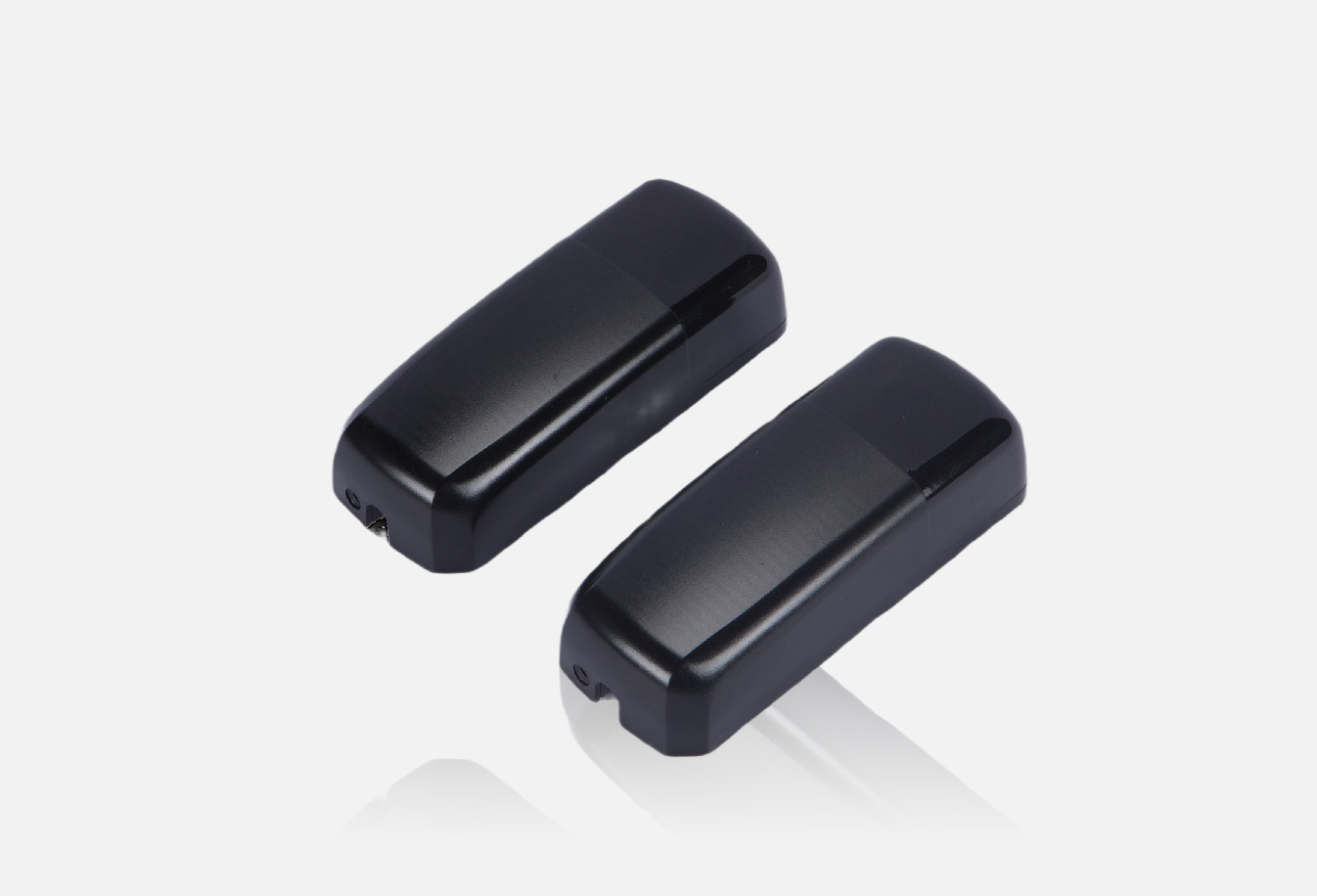
What Is a Photocell (Photoelectric Sensor)?
A photocell—also known as a photoelectric sensor—is designed to detect the presence or absence of an object using light.
How Photocells Work
A typical system consists of:
- Emitter: Sends an infrared beam
- Receiver: Detects the beam
- Output circuit: Triggers when the beam is broken
When an object interrupts the beam, the system changes state—often triggering a safety stop or reversal in automated systems.
This is known as beam interruption detection, and it is extremely reliable because it does not depend on motion, heat, or environmental inference.
Types of Photocells
-
Through-beam (emitter + receiver separate)
- Highest reliability
- Common in gate safety systems
-
Retroreflective
- Uses a reflector instead of a second unit
- Easier installation, slightly less robust
-
Diffuse reflective
- Detects light reflected from the object
- Less common in safety-critical systems
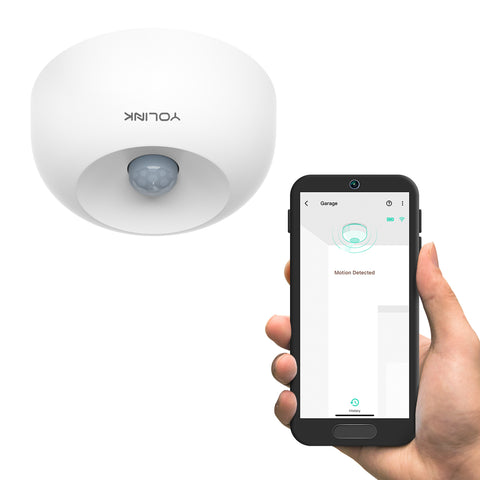
What Is a Motion Sensor?
A motion sensor detects movement within a defined detection zone rather than the presence of a specific object.
PIR Motion Sensors Explained
Passive Infrared (PIR) sensors detect changes in heat signatures:
- Humans emit infrared radiation
- The sensor identifies changes across its field of view
- Movement triggers the output
Key characteristics:
- Wide detection zones
- Sensitivity adjustments
- Susceptible to environmental factors
Microwave and Dual-Tech Motion Sensors
More advanced motion sensing includes:
-
Microwave (radar) sensors
- Detect motion via Doppler shift
- Can penetrate some materials
-
Dual-tech sensors (PIR + microwave)
- Reduce false alarms
- Require both signals to trigger
These are commonly used in security and lighting systems, not primary safety systems.
Core Differences: Photocell vs Motion Sensor
| Feature | Photocell | Motion Sensor |
|---|---|---|
| Detection type | Beam interruption | Movement in area |
| Output reliability | High (binary, deterministic) | Variable (probabilistic) |
| Safety use | Yes (fail-safe capable) | Limited |
| Detection requirement | Object presence | Movement required |
| Environmental sensitivity | Moderate | High |
| Typical use | Gates, doors, industrial safety | Lighting, alarms |
Detection Principle Deep Dive
Understanding the detection physics clarifies why these devices are not interchangeable.
Photocell Detection Principle
- Relies on continuous beam integrity
- Binary state: beam intact vs interrupted
- Can be configured as normally closed (NC) for fail-safe operation
- If power fails or alignment is lost → system triggers safe state
This is why photocells are widely used in safety interlock systems.
Motion Sensor Detection Principle
- Relies on signal interpretation
- PIR: detects heat movement across zones
- Microwave: detects frequency shift from moving objects
Limitations:
- No movement = no detection
- Slow movement may not trigger
- Environmental noise can cause false positives
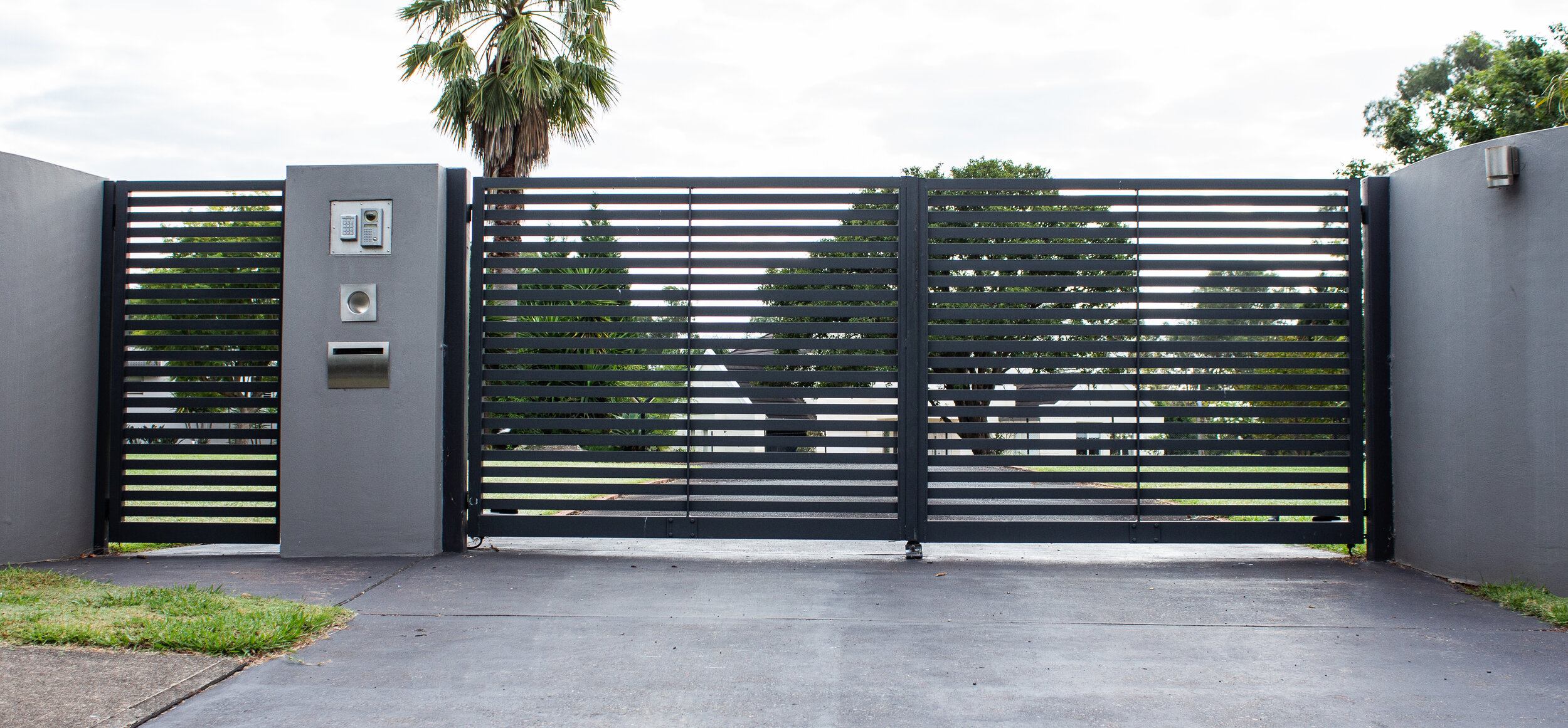
Use Case Comparison
Automatic Gates and Barriers
- Photocells: Essential for preventing closing on vehicles or people
- Motion sensors: Used for opening triggers (e.g., vehicle approach)
Industrial Doors
- Photocells act as safety beams
- Motion sensors assist with hands-free activation
Security Systems
- Motion sensors dominate
- Photocells rarely used due to narrow detection line
Outdoor Driveways
- Motion sensors detect approach
- Photocells provide collision prevention
Performance Factors
Accuracy
- Photocells: precise, deterministic
- Motion sensors: probabilistic, dependent on calibration
Range
- Photocells: defined by beam distance (often 10–30m or more)
- Motion sensors: defined by field of view and sensitivity
Environmental Conditions
- Photocells:
- Can be affected by fog, rain, misalignment
- Generally stable when properly installed
- Motion sensors:
- Sensitive to:
- Temperature changes
- Sunlight
- Moving vegetation
- Sensitive to:
Safety vs Convenience: Why It Matters
A critical distinction:
- Photocells are safety devices
- Motion sensors are convenience devices
In regulated environments (e.g., industrial doors), safety systems must:
- Detect presence reliably
- Fail safely
- Not depend on user behavior
Motion sensors cannot guarantee these conditions.
Can Motion Sensors Replace Photocells?
Short answer: No.
Motion sensors cannot replace photocells in safety-critical applications because:
- They require movement to detect
- They cannot guarantee detection of stationary objects
- They are not inherently fail-safe
Using motion sensors alone in a gate system introduces unacceptable risk.
Choosing the Right Sensor: Decision Framework
Use this simplified logic:
Choose a Photocell if:
- Safety is required
- You need guaranteed detection
- The system must comply with safety standards
- The object may be stationary
Choose a Motion Sensor if:
- You want automatic activation
- You need wide-area detection
- Convenience is the priority
Best Practice: Combining Both Technologies
In modern automation systems, the optimal configuration is:
- Photocells → safety layer
- Motion sensors → activation layer
Example:
- Motion sensor detects vehicle → opens gate
- Photocell ensures gate doesn’t close on obstacle
This layered approach improves both user experience and safety compliance.
Common Misconceptions
“Do photocells detect motion?”
No. They detect presence via beam interruption, not motion.
“Do motion sensors detect objects?”
Only if the object is moving and detectable by the sensing method.
“Are photocells outdated?”
No. They remain industry-standard for safety applications.
“Can motion sensors work outdoors?”
Yes, but performance depends heavily on environmental conditions and calibration.
Conclusion
Photocells and motion sensors serve fundamentally different roles in automation and safety systems.
- Photocells provide precise, reliable, fail-safe detection
- Motion sensors offer flexible, area-based activation
Treating them as interchangeable is a common but costly mistake.
For any application involving human safety, vehicle movement, or mechanical automation, photocells are not optional—they are essential.
For optimized systems, the most effective approach is not choosing between them—but deploying both intelligently.
FAQ
1. What is the difference between a photocell and a motion sensor for gates?
A photocell detects objects by beam interruption and ensures safety. A motion sensor detects movement and is typically used to trigger opening.
2. Can a photocell detect a person walking toward a gate?
Only when the person physically interrupts the beam. It does not detect approach.
3. Do motion sensors work outdoors for automatic gates?
Yes, but performance may vary due to weather, temperature, and environmental movement.
4. How far do photocells detect objects?
Typically 10–30 meters depending on model and alignment.
5. How far do PIR motion sensors detect movement?
Usually 5–15 meters, depending on lens design and sensitivity settings.
6. Do photocells work at night and in sunlight?
Yes. They use modulated infrared beams designed to operate in various lighting conditions.


